by Tito Caba, Green Space Director
Fair Hill has always lived with the sun.
The burial ground embraces and honors those laid to rest here with warmth like a quiet, enduring hug. It remembers names spoken three hundred years ago and will remember them long after we are gone. The sun returns each day without us asking.
Each spring, flowers rise through soil and the sun breaks through the leaves as the days stretch longer.
The sun works this land slowly and steadily. It brings sweetness to the fruit and strength to the stems. Season by season, its light brings Fairhill more than five thousand pounds of produce — food grown through the careful work of the land, the water, our staff, and our volunteers.
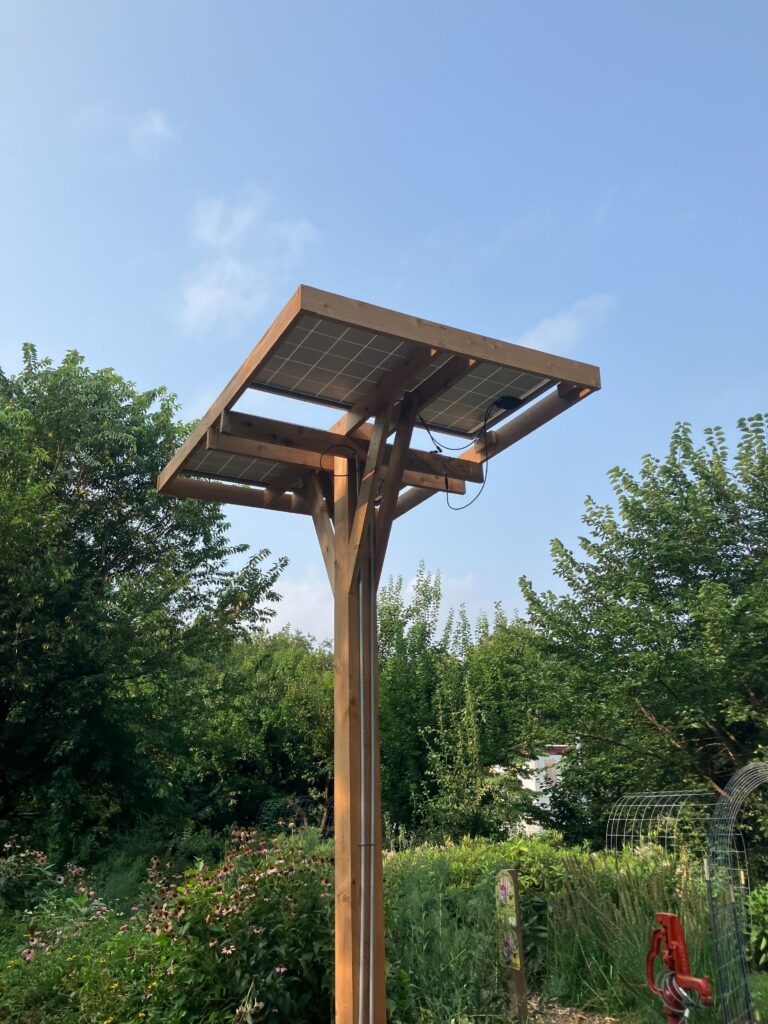
Last summer, we chose to meet the sun with responsibility by building solar panels on our historic site. We planned deliberately, knowing that making the grounds more sustainable is to honor its history: A hill beside a Lenape trading path, a Quaker meeting grounds and burial site, a nearly forgotten dumping ground, and now a community green space.
This work was made possible through the extraordinary commitment and generosity of Robert Smith, an engineer from the University of Pennsylvania, who offered his expertise voluntarily. His knowledge shaped every phase of the project, guiding decisions with attention to function and place. We could not have done this without him.
The work itself was carried out by staff, interns, and volunteers. Nearly five hundred feet of underground-rated wire was laid by hand. A trench — twenty-four inches deep — was cut through sun-warmed earth. The labor unfolded in the height of summer, careful and exacting.
The project took shape without interruption to the life of the site, reflecting our commitment to this place where we learn, nourish, and restore.
Historic Fair Hill Solar transforms this space into a living classroom. Students can now learn how solar design reduces heat, replaces polluting energy, and maintains the integrity of the land.
The tree canopy and open soil show how shade prevents heat from accumulating, while the solar panels demonstrate how sunlight can be captured as energy instead of becoming stored heat and pollution. Together, they reveal how land care and clean energy work in the same direction.
The energy captured here helps offset emissions. Now, the tools and equipment required to care for this land are electric. This is just one of the ways we try to live out the Quaker testimony of Stewardship on this historic Quaker site.
Using the power of the same sun that warms the graves, that wakes the flowers, that feeds the community.
The sun has always been here. Now, we are answering it back.